STORMS
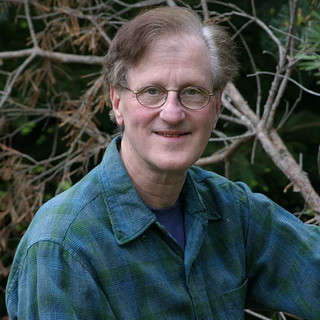

by Cliff Jacobson
Canoeing texts tend to dismiss storms with the simple admonition that you should “paddle close to shore when the wind is up” and “get off the water at the first sign of lightning.”
It’s not so simple. Lightning, for example, often works in mysterious ways that defy textbook advice. Here’s an example from my own experience on the Gull River in Northern Ontario:
My friend, Al Todnem was in the lead when lightning suddenly lit up the sky and rain came down so furiously that I could barely see my bow partner. The river was about 200 feet wide at this point, and the shoreline was choked with trees to the water’s edge. There was no safe landing in sight.
The distance of a lightning strike can be estimated by dividing the number of seconds between the flash and thunder boom by five. At the 2.5 second strike (lighting is half-a-mile away!), Todnem turned sharply toward shore and poured on the coal. I stayed in the middle of the river and hollered for him to come back. But he couldn’t hear me above the roar of the rain.
When Al was just offshore, lightning struck the top of a tall birch at the river’s edge. The top exploded into flame and showered cinders in all directions. The burning top—which probably weighed half a ton—splashed down a paddle length from his canoe! He back-paddled furiously as embers showered the boat.
Fortunately, no one was injured.
The point is that getting to shore when lightning strikes is a good plan only if there’s a safe landing spot away from tall trees.
Often, there isn’t!
Unforgiving topography—a steep, slick or vegetation-choked beach is one reason why. Another is that the sun-lit opening of a river valley encourages tree growth near the water’s edge, with the result that the tallest trees often grow right next to the water. Get near one and, as the above case illustrates, you’re asking for trouble!

A cone of lightning protection extends roughly from the tallest object in an area about 45-degrees all around. I try to stay within this protected zone but far enough away so lightning can’t jump from a tree to me. Since lightning can jump a dozen feet or more, I figure I’m probably safe if I stay 50-100 feet offshore. Respect the "cone-of-protection" when pitching your tent too. Yes, I know, that isn't always possible. Sometimes, you just have to bite the bullet and take a chance.
Paddling a big, brawny lake in a lightning storm is especially scary because the high winds that accompany the storm produce huge waves that violently crash the shore. You dare not get too close to land for fear of being crushed against a rocky beach. The solution is to stay as close to shore as you can—and keep paddling!
Why keep paddling? Because if you stop, the canoe may broach (turn sideways to the waves) and capsize, or possibly surf at high speeds straight into a rocky shore.
CAMPING IN A STORM


Camping in a forested area naturally poses some risks. Back in the 1960’s, I was a forester in western Oregon and working in the woods when a bad storm came up. I ran for my life as trees fell like match sticks all around me. I swam a creek I had just hours before waded across!
Lightning is another matter. I’ve canoed thousands of miles and can recall only three potentially serious lightning events, one of which is described above. High winds and blow-down, however, are common.
CHOOSING A CAMPSITE
When choosing a campsite, scrutinize the area for what old time loggers called “widow makers.” These are dead and damaged (by insects, disease, fire, or wind) trees, or leaning ones that could fall on you! Study the canopies of trees that border a clump of trees or are otherwise not well-protected from blow-down. Could a high wind send branches crashing down on your tent? If so, can you cut down the offending tree or its branches? If not, I keep canoeing!
Note: the official line in managed wilderness areas is that standing trees (alive or dead) should not be cut. The safe alternative is to paddle on to safer ground.
On the other hand, if there’s minimal danger, pitch your tent but be keenly aware that there are no guarantees. If a storm is brewing on the horizon, keep a folding saw in your tent, near you! This precaution once saved the day for Bert Heep (retired trip coordinator for Piragis Northwoods Company in Ely, MN) and his wife, Diane, when a thigh-thick tree in the Boundary Waters Canoe Area crashed through their tent and pinned them inside while they slept. Fortunately, Bert had a saw handy and was able to cut his way free.

LIGHTNING
Campers are commonly advised to leave their tent when lightning strikes and seek shelter in a protected area away from tall trees.
Right!
Frankly, I’m not about to leave my cozy tent when rain is falling in buckets and lightning fills the sky. At these times, I’m smugly pleased to be warm and dry. However, I do take precautions to isolate myself from electrical current:
First, I fold my foam sleeping pad in half. Full length pads can be tripled. Then, I sit upright on the pad with just my butt and heels touching the ground. If conditions are very scary, I put on my neoprene Chota knee-high boots, which may help insulate my feet from an electrical charge. I place any other neoprene clothing (wetsuit, vest, gloves, etc.) I may have under my butt. My hope is that if lightning strikes my tent—or a root that runs beneath my tent—the foam will prevent me from being grounded.
Like I said, there are no guarantees!

I should add that water is a fair conductor, so all is lost if rain floods your tent during the storm. The solution (which I continue to advocate in all my writings) is to always use an oversized waterproof plastic groundcloth inside your tent. The plastic will prevent water that gets into your tent through worn fabric and stitching, from contacting you—and conducting electricity.
There is no pat solution to safely canoeing and camping in a lightning storm. My methods have evolved from half-a-century of wilderness travel—of seeing how things really are, not how they are supposed to be. Spend enough time in the bush and you may come to realize what native Americans have always known—that one’s survival and comfort in the wild outdoors depends more on careful observation and common sense than on the mutterings of science.

My 90 minute video, THE FORGOTTEN SKILLS details the most important camping skills. If you can do them all you'll be a hero to your friends!
My book, BOUNDARY WATERS CANOE CAMPING, 3rd Edition, details everything you need to know to safely and enjoyably canoe the BWCA.
My book CAMPING'S TOP SECRETS, 2022 revision, details practical camping tips and procedures that only the experts know. If you know just a few of these tricks, you'll be a hero to your friends!
XXX


Comments